
Coming off GamStop, the official route
There is exactly one lawful route by which a live GamStop registration ends, and this page walks it in detail. It also reads the UK scheme against its European counterparts, from the Swedish Spelpaus register to the Danish ROFUS and the Dutch CRUKS, because the design of the cancellation route is the single feature that most distinguishes national self-exclusion regimes from one another. The cancellation route is where the scheme meets the individual's own decision, and where the difference between a block that lifts by default and a block that requires an active step becomes a difference in outcome. This chapter treats the mechanics of the UK route with the seriousness of a policy paper, because that is what the plain reading of the scheme deserves.
Why this page exists and what it will not do
Offshore Ledger UK reads regulators for a living, and the paper on which national self-exclusion schemes are built has become one of the most-read sections of the site. The reason is that a UK adult searching for a route out of GamStop before the period they chose has ended is often searching in a moment that is not calm, and public information written in plain English at that moment is worth more than any operator's marketing copy would ever be. This page is therefore written to be readable in a moment that is not calm. It sets out the one lawful route by which a live registration ends. It names the auto-extension. It compares the UK route to the routes offered by three counterpart European registers, so that a reader who wants a comparative frame has one to hand. And it names the practices this site considers unsafe, because a public information site that ducks the naming step is not doing its work.
What this page will not do is present cancellation as a workaround, present offshore play as a route around self-exclusion, or steer a reader towards a specific operator. Cancellation is not a workaround, it is a scheduled ending. The offshore market is not a route around exclusion, it is a market outside the UKGC perimeter with its own trade-offs that this network reads elsewhere. The purpose of the chapter is to make the mechanics visible so that the adult concerned can make the decision on the basis of the paper trail rather than on the basis of a claim made by an agency that has no access to the database it claims to unlock. Every claim on this page is dated to the 5 August 2026 review cycle, and every claim can be checked against the public source named.
02The only route that works, in six steps
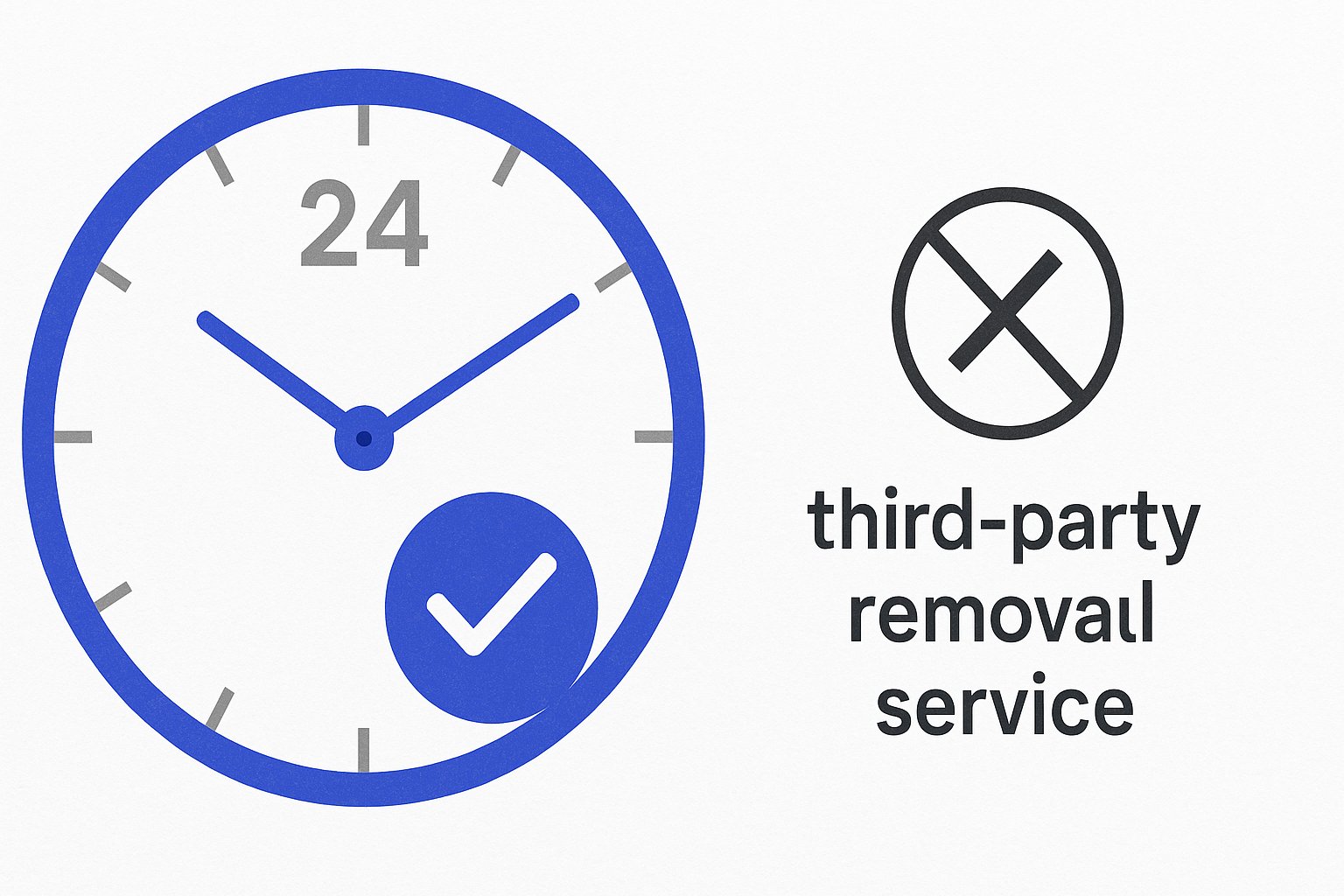
The scheme itself sets out the mechanics in plain form on the GamStop website, and the six steps that follow are a paraphrase of what appears there. The first step is the initial registration, at which the person chose a period of six months, one year or five years and provided the details, including telephone number and postcode, that the database matches on. The second step is the running period, during which the exclusion is active and every UKGC-licensed remote operator queries the database at registration and at deposit. The third step is the expiry event, at which the technical block is released but does not immediately unlock the ability to open a UKGC account. The fourth step is the 24-hour cool-off, which begins at the expiry event and during which the registered person cannot access UKGC-licensed remote sites even if they take positive action. The fifth step is the active-step decision, at which the person contacts GamStop within the cool-off window to indicate whether they wish the exclusion to end or to continue by re-registration. The sixth step is what the database records at the close of the cool-off, which is either an unlocked record or a fresh exclusion.
The six-step framing is intentionally sequential because the design of the scheme is sequential. The technical block does not lift by inertia, and the cool-off does not shorten by request. Both of those design choices are traceable to the same evidence base that informed the design of the Swedish, Danish and Dutch counterpart schemes, which is that a period of enforced pause immediately before a change of state materially reduces the probability of an immediate return to harmful play. The GamStop cool-off is calibrated at 24 hours in the UK context; the counterpart schemes have used a range of pause lengths, from Spelpaus with no explicit cool-off period but an active-step cancellation to ROFUS with a permanent-exclusion option that removes the cancellation question entirely. The UK design sits closer to Spelpaus than to ROFUS on this axis, and closer to CRUKS than to either on the auto-extension axis.
A closer look
The database mechanics on the UKGC side are worth reading directly rather than in summary. Every UKGC remote licence carries a licence condition that requires the operator to query GamStop at the point of account creation and at the point of deposit, and to refuse both where a positive match is returned. The operator is not the party that lifts the block, does not see the underlying reason for the exclusion, and does not have a technical route into the database to shorten it. This is the reason a claim by any operator or third party to be able to remove a person from GamStop before expiry can be dismissed on the face of the paperwork rather than on any behavioural or ethical ground. The paperwork is public, the licence condition is public, and the database access is one-way.
03Why the minimum period cannot be shortened
The minimum period chosen at registration is binding for the length of that period. GamStop does not offer a shortening route, and the design decision is deliberate. The behavioural evidence base drawn on by the Responsible Gambling Trust research programmes that preceded the scheme, and by the counterpart research programmes in Sweden and Denmark, points in the same direction on this question, which is that a scheme intended to hold delivers weaker outcomes if it opens a shortening route at the request of the excluded person. That evidence base is not a matter of opinion; it is the reason the scheme is built the way it is built, and it is why the operators sitting under UKGC licence conditions do not have a route to shorten the period even if a customer asks them to. Where a customer asks a UKGC operator to shorten their GamStop registration, the operator's compliance function is required by LCCP to decline and to signpost the customer to GamCare.
The comparative picture across Europe adds context. Spelpaus in Sweden, run by the regulator Spelinspektionen under the 2018 Gambling Act, offers cancellation at the point at which the registered period ends but does not offer an in-period shortening route. ROFUS in Denmark, run by Spillemyndigheden, offers periods of one, three, six or twelve months, plus a lifetime exclusion that is not cancellable at all. CRUKS in the Netherlands, run by Kansspelautoriteit under the Remote Gambling Act, offers a minimum of six months and requires cancellation via DigiD, the Dutch national digital identity system, which produces a friction step of its own. Across all four regimes the underlying design principle is the same: a scheme intended to hold does not shorten in-period, and the regulator does not treat the shortening request as a defensible customer service.
04The twenty-four hour cool-off in detail
The 24-hour cool-off is the pause between the expiry of the technical block and the availability of the unlocked record to UKGC-licensed remote operators. Its length is calibrated to sit long enough to produce a reflective window and short enough not to be experienced as an obstacle by a person coming off exclusion by considered choice. The window opens automatically at the expiry timestamp of the original registration, runs for 24 clock hours, and closes at the point at which the excluded person contacts GamStop to confirm the ending or lets the auto-extension take effect. During the window the operators continue to see the exclusion as active on their query, so account creation and deposit remain refused across the entire UKGC-licensed remote market for the duration of the 24 hours. The window is not a soft delay; it is a hard state of the record.
The design of the cool-off is the point at which the UK scheme aligns most closely with the wider harm-reduction literature. A reflective pause immediately before a change of state is the design pattern used by the Financial Conduct Authority in the consumer credit cooling-off period, by the Advertising Standards Authority in complaint escalation, and by the UK bank gambling switches described on the Payments page. It is not unique to gambling and it is not new; it is a design pattern with a long evidence base. The behavioural mechanism is well understood in the psychology of change, and the practical effect for a person coming off GamStop is that a decision made with an active 24 hours behind it sits differently in the person's own mind than a decision made in the same moment as the block lifting. That, and not any bureaucratic reason, is why the cool-off is 24 hours and not zero.
Key points
- The only route out of a live GamStop registration is the expiry of the chosen period
- A 24-hour cool-off follows the expiry event before UKGC-licensed sites can be accessed
- If no active step is taken, the exclusion auto-extends for a further seven years
- Third-party removal services have no access to the database and cannot shorten the period
- Spelpaus, ROFUS and CRUKS share the same in-period no-shortening design
The seven-year auto-extension explained
If the excluded person takes no active step during the 24-hour cool-off, the registration extends automatically by a further seven years. The extension is not a punishment and is not a bureaucratic default; it is a design choice with a specific evidence base behind it. Under the previous design the registration would have unlocked passively at the close of the cool-off, which the research programme that shaped the current scheme identified as a failure mode. Persons who had come off exclusion passively were substantially more likely to return to harmful play than persons who had come off it by active choice, and the auto-extension provision was written into the scheme precisely to close that failure mode. The extension is a way of ensuring that the person who wanted to be excluded remains excluded, and the person who has considered the decision and made an active step to end the exclusion is the person to whom the record unlocks.
The seven-year length was calibrated to be materially longer than the maximum initial period of five years, so that a person who has considered a five-year exclusion but did not remember to take the active step at expiry is not returned to the market for a longer span than they chose. It is not a lifetime block, and a person under an auto-extended exclusion who subsequently wants to end the exclusion can contact GamStop through the same channel that any other query uses. The channel is public, is documented on the GamStop website, and does not require an intermediary. The auto-extension is not a trap and is not designed to be one; it is a safety valve that puts the burden of ending the exclusion on the excluded person, which is where the harm-reduction literature places it.
A closer look
The comparative picture at this point is instructive. Neither Spelpaus, ROFUS nor CRUKS operates an equivalent auto-extension provision at expiry. Spelpaus records a period end, and unless the person re-registers, the record unlocks. ROFUS offers a permanent-exclusion option in the first place, which handles the same design question by removing the cancellation route rather than by extending it. CRUKS records a period end and requires a DigiD-authenticated cancellation step to unlock. The UK scheme has therefore chosen a distinctive answer to the same design question, which is to require an active step at the moment of ending, and to default to continued exclusion if the step is not taken. Whether the UK answer or the counterpart answers deliver better outcomes on the underlying harm metric is a live research question. For the reader here, the material point is that the UK auto-extension exists, is deliberate, and produces the exclusion outcome that a person taking no action is presumed to have preferred at the moment they registered.
06Third-party removal services, why they are a scam
A search for the phrase "remove me from GamStop" or its variants will surface a rank of websites and agencies offering to remove a person from the GamStop database, sometimes for a fee, sometimes as a lead-generation front for offshore operators. The paperwork on those services is worth reading directly. GamStop is a database queried by UKGC-licensed operators under a licence condition. There is no legal route into the database for a private-sector agent. There is no technical route into the database for a private-sector agent. The only parties with the ability to change a live registration are GamStop itself, in the specific circumstances documented on its own site, which do not include commercial removal, and the registered person acting through the official channel. A service that claims to be able to remove a person from GamStop before expiry is either misdescribing what it does, in which case it is trading on a misrepresentation, or misunderstanding what GamStop is. Either way the service is not doing what it claims.
The practical consequence for a person who engages one of those services is worse than a wasted fee. Handing over identity documentation to an agency that is at best mis-selling and at worst harvesting the documentation for onward use is a route into identity fraud that a lawful adult would not otherwise be exposed to. The documentation typically requested by the removal agency, which includes a passport or driving licence copy, a proof of address, and a signed authority, is the same package that a fraudulent operator would need in order to open a bank account or a credit line in the name of the individual concerned. This site names the practice as unsafe because it is unsafe, and because the paper trail shows why. If a reader is looking at one of those agencies at this moment, the safe step is to close the tab, take the 24-hour breather, and consider whether the reason for wanting to remove the exclusion sits within the reasons the exclusion was placed for in the first place.
Harm-reduction alternatives while you wait
The window between a decision to come off GamStop and the expiry of the registration is a window in which a range of harm-reduction alternatives sit alongside the technical block itself. The bank gambling switches described on the Payments and checks chapter are the first of these, and turning the switch on for the duration of the exclusion is a step that does not require anyone else to know. The card-level block reaches the retail card layer and, in combination with the technical block on UKGC-licensed remote sites, closes the two most common routes into online play from the average UK personal current account. Deposit-limit tools inside a UKGC-licensed operator account are irrelevant during a live exclusion because the account cannot be accessed, but they are relevant during a period following an active-step cancellation and are worth turning on at that point.
Beyond the technical measures sit the human ones, and those are where the National Gambling Helpline on 0808 8020 133 fits. GamCare offers structured support to a person on exclusion, including a brief-intervention model that does not require a treatment referral. BeGambleAware hosts a self-assessment tool that a person can work through in private. The NHS gambling clinics, expanded under the NHS Long Term Plan, offer clinical treatment for a person for whom the exclusion is a step within a wider treatment journey. The Getting support chapter walks each of those routes in detail. The point of the paragraph here is that the wait for expiry is not empty time; it is a window in which the routes into help are open and can be used without the person needing to decide whether they will re-register at expiry. That decision can be made at expiry, and the routes into help are the same whether the decision is to re-register or not.
08How to call GamCare before you decide
A first call to the National Gambling Helpline is not a treatment referral, is not a commitment to any further step, and is not, in the strictest sense, a call about gambling. It is a call about the person calling, and the adviser on the other end of the line is trained to take that call at whatever point in the person's own considering they happen to be. Callers do not need to say who they are. Callers do not need to know what they want. Callers who are family members or friends of the person gambling are welcomed as callers in their own right, because the harm from gambling does not stay inside one person. The line is answered 24 hours a day, every day of the year, and is free from UK landlines and mobile networks. The adviser will listen more than talk, and the call will end at the point the caller wants it to end.
For a person considering the end of a GamStop period, a call to GamCare made a week or two before the expiry date sits in a different register from a call made at the expiry itself. The earlier call is calmer, the adviser has more room to explore the question, and the caller has more room to hear their own answer. The offshore market is not a replacement for that call, is not a substitute for that call, and is not a workaround for that call. This site publishes the offshore paperwork because a reader who has already made a decision is better served by accurate information than by silence, and because the paperwork tells the reader more about the trade-off than any operator will. But the call comes first, and the paperwork can wait a day. The National Gambling Helpline is on 0808 8020 133, and it will answer.
Read next
- GamStop explained, the scheme, the periods, the checks
- The legal position for UK players outside GamStop
- The risks, explained without the marketing
- Payments and checks, banks, cards, crypto, KYC
- Getting support, helplines, clinics, family, money
Sources and verification
Verified against the public GamStop scheme documentation on gamstop.co.uk, the UKGC LCCP on gamblingcommission.gov.uk, and the counterpart register documentation published by Spelinspektionen, Spillemyndigheden and Kansspelautoriteit. Last checked 5 August 2026.
Frequently asked questions
How does the UK GamStop cancellation route compare to Spelpaus in Sweden or ROFUS in Denmark?
The UK GamStop scheme, the Swedish Spelpaus register run by Spelinspektionen, the Danish ROFUS register held by Spillemyndigheden, and the Dutch CRUKS register run by Kansspelautoriteit all share the same underlying design of a binding self-exclusion period that cannot be shortened. Their cancellation routes differ. GamStop uses a 24-hour cool-off after expiry and a seven-year auto-extension. Spelpaus offers 1, 3, 6 or 12 months and open-ended, with an active-step cancellation and no equivalent auto-extension. ROFUS offers 1, 3, 6, 12 months or lifetime, with lifetime being genuinely permanent. CRUKS offers a minimum of six months and requires an active cancellation via DigiD.
Can a third-party service shorten my active GamStop registration?
No. GamStop is a national database queried by UKGC-licensed remote operators and there is no legal or technical route by which a private-sector agent can shorten a live registration. Every website or agency that offers to remove someone from GamStop before expiry is either misdescribing what it does or misunderstanding the scheme. The auto-extension provision is intentional and is drawn from the same evidence base that shaped the 24-hour cool-off.
What happens at the end of a GamStop period if I do nothing?
The registration auto-extends for a further seven years. The extension is a deliberate design choice and is calibrated to the same behavioural evidence base as the 24-hour cool-off, namely that a person who came off exclusion by inertia is materially more likely to return to harmful play than a person who came off it by active choice. To end the registration at expiry you must actively contact GamStop within the cool-off window.
Why does the cancellation route matter more than the technical block itself?
The cancellation route matters because it is the moment at which the scheme meets the individual's own decision. A block that lifts by default retrains the individual to expect no active step, and the evidence base drawn on by Swedish, Danish and Dutch counterpart schemes points in the same direction as the UK design, which is that a scheme designed to hold produces better outcomes when its unwinding requires an active step by the excluded person.
If I want to stay excluded, can I re-register during the cool-off window?
Yes. A person who reaches the end of a GamStop period and wants to stay excluded can register a fresh period during the cool-off window. There is no penalty for doing so, and the fresh registration is a clean six-month, one-year or five-year term from the date of the new registration.
Talk to someone today
The National Gambling Helpline is free, confidential and open 24 hours a day, seven days a week.